
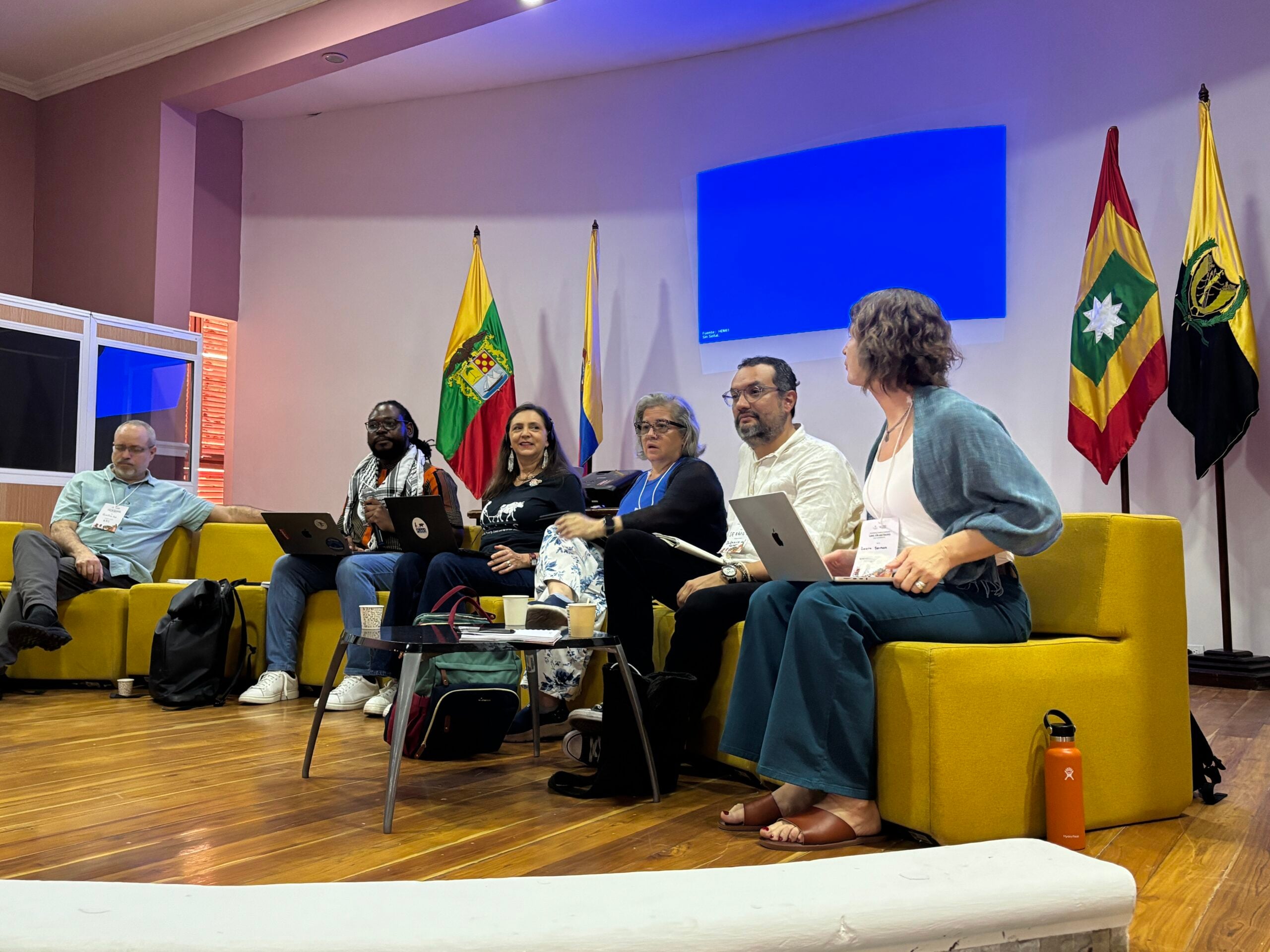
By Professor Ruth Hall
In Africa, the continent with the highest proportion of untitled land in the world, a fight is on – not just for the land, but to define which rights get recognition, and who decides. In contrast to those who focus on rural democratisation as a matter that needs to focus on national governments, the story I set out here is one both sub-national and supra-national.
Vacant land narrative
I would like to quote Dr Akinwumi Adesina, African Development Bank president, who said in 2017: “Africa sits on 65% of the uncultivated arable land left in the world. What Africa does with agriculture will undoubtedly determine the future of food in the world. Unlocking that potential must start with the savannas of Africa. These cover a mind-boggling 600 million hectares, of which 400 million are cultivable. But just 10% of this is cultivated, a mere 40 million hectares.” This is a prime example of a flawed ‘vacant land’ discourse.
Similarly, in 2009, the World Bank published a report that likened sub-Saharan Africa to a ‘sleeping giant’ that needed to be awakened, and like Sleeping Beauty, what this sleeping giant needed was the kiss of the market. It relied on satellite imagery to determine rates of cultivation and to define the ‘yield gap’ between what can be produced and marketed farm production.
We see this narrative, with its colonial origins, being actively revived and promoted by agencies seeking to advance visions of Africa as empty, unowned, unclaimed, and available for multiple purposes. It comprehensively conflates:
- Unoccupied
- Empty or vacant
- Uncultivated
- Cultivated but unproductive
None of the above mean that it is not claimed, owned, or the home territory of people. It claims that what is needed is to see cultivation, at scale, visible from space. The absence of large-scale production, or large-scale extraction, is equated with ‘vacant’ and therefore ‘free’.
What do investors or governments do when they find the land they want to acquire is in fact not free?
‘Responsible land governance’
This is where ‘responsible land governance’ comes in. First, we need a genealogy of this term. The term ‘governance’ can mask anything from democracy to land grabs. Being responsible is defined as a set of norms rather than relational – who is responsible to whom? The terminology emerged nearly 15 years ago, when the World Bank proposed its set of Responsible Agricultural Investment (RAI) principles, for investors to follow as an alternative framing to the Tenure Guidelines or VGGT. The difference was that these would be established by international financial institutions. They were for investors, not states. Sanctions for being irresponsible would be via value chains. Industries would regulate themselves, with multinational corporations and their financiers being their own watchdogs. This is a model that’s now been described as ‘multistakeholderism’ – rules for capital. This would create upward accountability, not downward to communities. Procedural safeguards – genuine consultation and participation by communities – are what is needed.
‘Responsible’ creates norms that are created far away from affected people. Olivier de Schutter characterised the RAI approach as being a recipe for ‘dispossessing the world’s peasantry responsibly’. This is in contrast of course with democratic processes as defined by people affected. It may consider what we term the four Rs – redistribution, restitution, reparation, or regulation – but also recognition without representation, let alone revolution.
Tenure changes
Kenyan legal scholar Okoth-Ogendo pointed out that African property has often defined as being an absence of property, and needing to be converted into property through a variety of formalisation, recording, registration, demarcation, and more. This view echoes through history, from the colonial period and continues into the post-colonial. There is a direct line from this view of a zone of no property to the extensive and costly titling programmes that the World Bank has so energetically supported, most notably in places like Ethiopia and Rwanda.
Neo-customary tenure: Admos Chimhowu argues that the neo-liberalisation of customary tenure include privatising rights and commoditisation of land, not only driven from above but has also provoked processes of commoditisation and marketisation within communities, leading to new hybrid forms of ‘customary markets’. The result is a reconfiguration of the way people relate to land. This neo-customary tenure has five outcomes:
- creating new class dynamics (those with registered rights and those without);
- greater power of states and markets, and less for social institutions;
- the rise of business and political elites in rural governance – the new ‘big men’;
- miniaturisation of smallholder farming; and
- the growth in medium scale farms, amidst growing inequality and landlessness.
This transformations in tenure creates a pincer movement, where pressure is exerted from above in the form of formalisation initiatives, privatisaion, and commodification; and from below through demographic changes and the emergence of customary property marketisation. Until recently, only 10% of rural land outside conservation areas was formally registered.
African women’s land rights
Nowhere are the tensions more evident than in the case of African women’s land rights. Theresa Auma’s work in Uganda shows the dangers of the mainstream feminist arguments to protect women’s rights in a manner that disembeds rights from families, lineages and communities. Hers is part of a growing voice of African women criticising land titling for women.
Research that our institute has done across four countries in Southern Africa shows that 81% of women living in areas where there are struggles under way on land rights prefer customary tenure to private ownership governed by the state. They want rights of recognition and control over land, and they want involvement in decisions. They want to smash the patriarchy, but they want to smash the patriarchy within a system of social property. Custom is a sphere of contestation where external policy fixes are dangerous. It is a difficult fight to have, especially when the alternative may well be struggles over patriarchal norms. That is the struggle for democracy within social property regimes, not the abandonment to the market and to global institutions to decide what is responsible.
What we see in South Africa where the Alliance for Rural Democracy is led by rural women, demanding accountability from both traditional authorities, chiefs, and elected local government. Struggles can be supported through solidarity, rather than substituting for them via technocratic policy fixes. The push for responsible land governance defined as global stakeholderism comes alongside its corollary – formalisation, privatisation, marketisation and titling. What rural titling programmes do is to remove land and decision-making about it out of socially-embedded relationships.
This is not to say responsible land governance is irrelevant, but it can be meaningless unless anchored in democratised local processes. The call for defence of customary rights is not the same as the call to defend a fixed, unchanging custom. It is a fight for a sphere in which real democracy and accountability is possible.
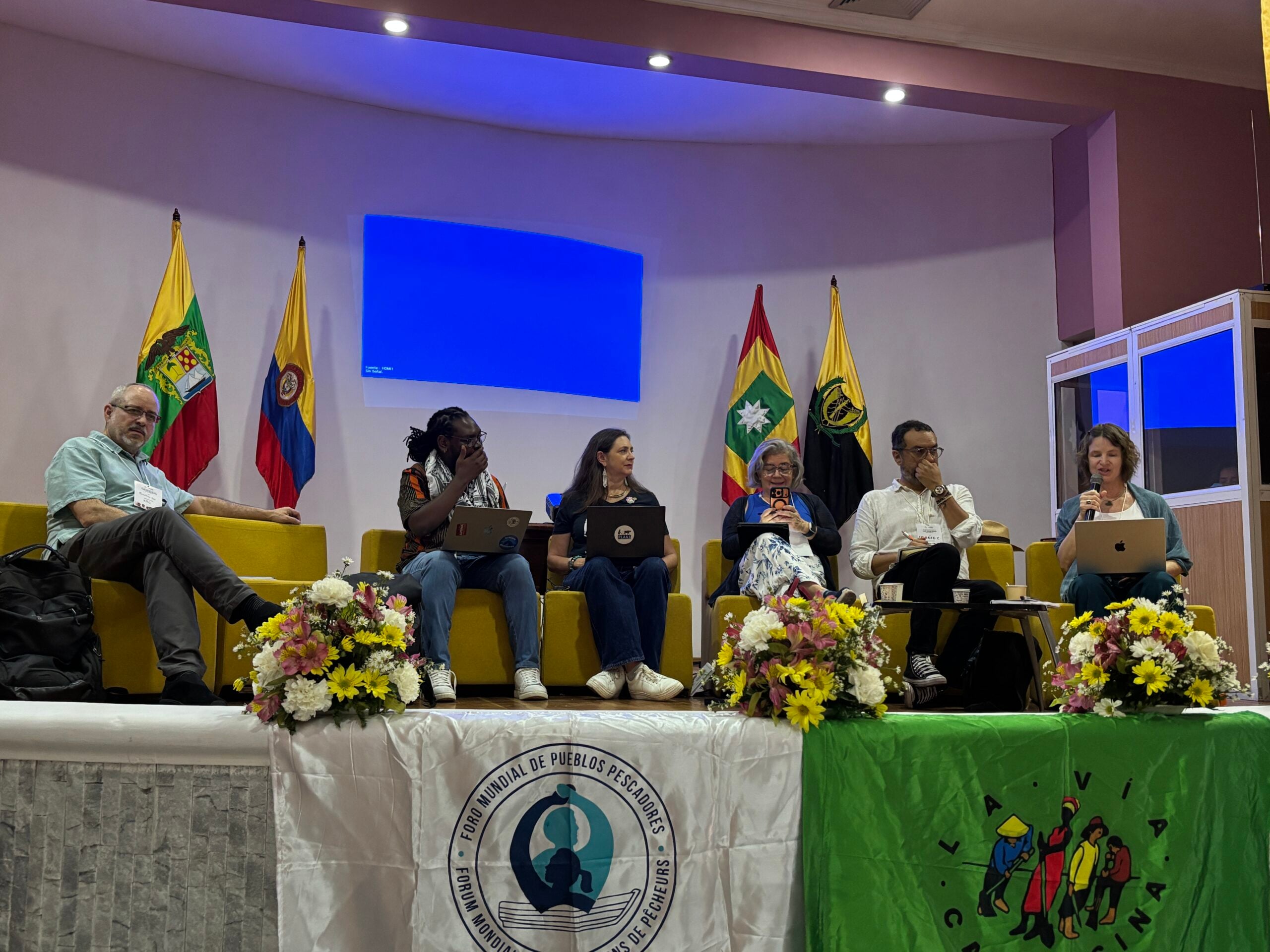
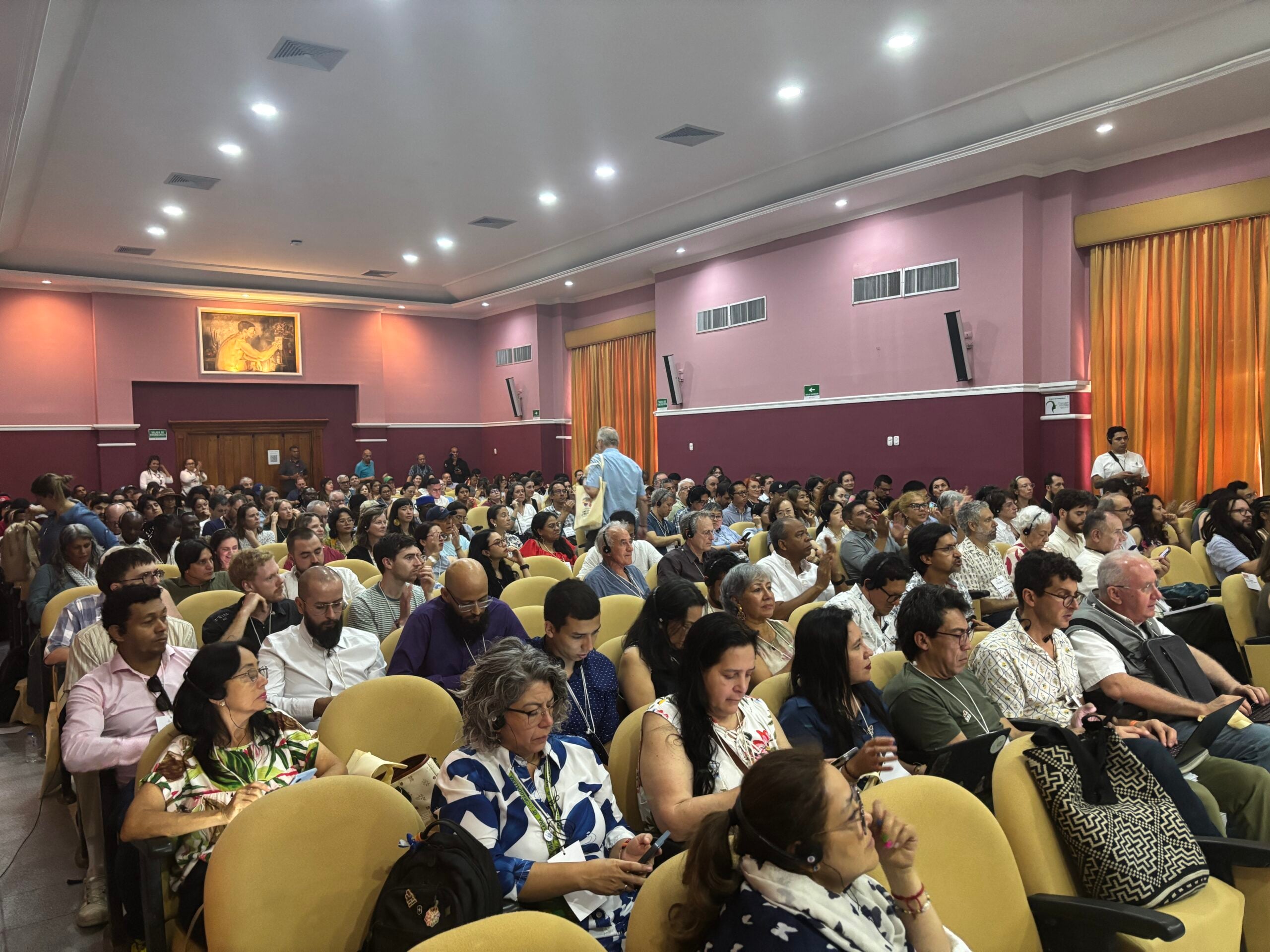
This blog is based on a panel at the second International Academic Conference Land, Life and Society in Cartagena, Colombia. This conference took place ahead of the Second International Conference on Agrarian Reform and Rural Development (ICARRD+20). The panel was entitled: Responsible Land Governance and Rural Democratisation: State–Movement Interaction, Institutions, Power and Participation.
