
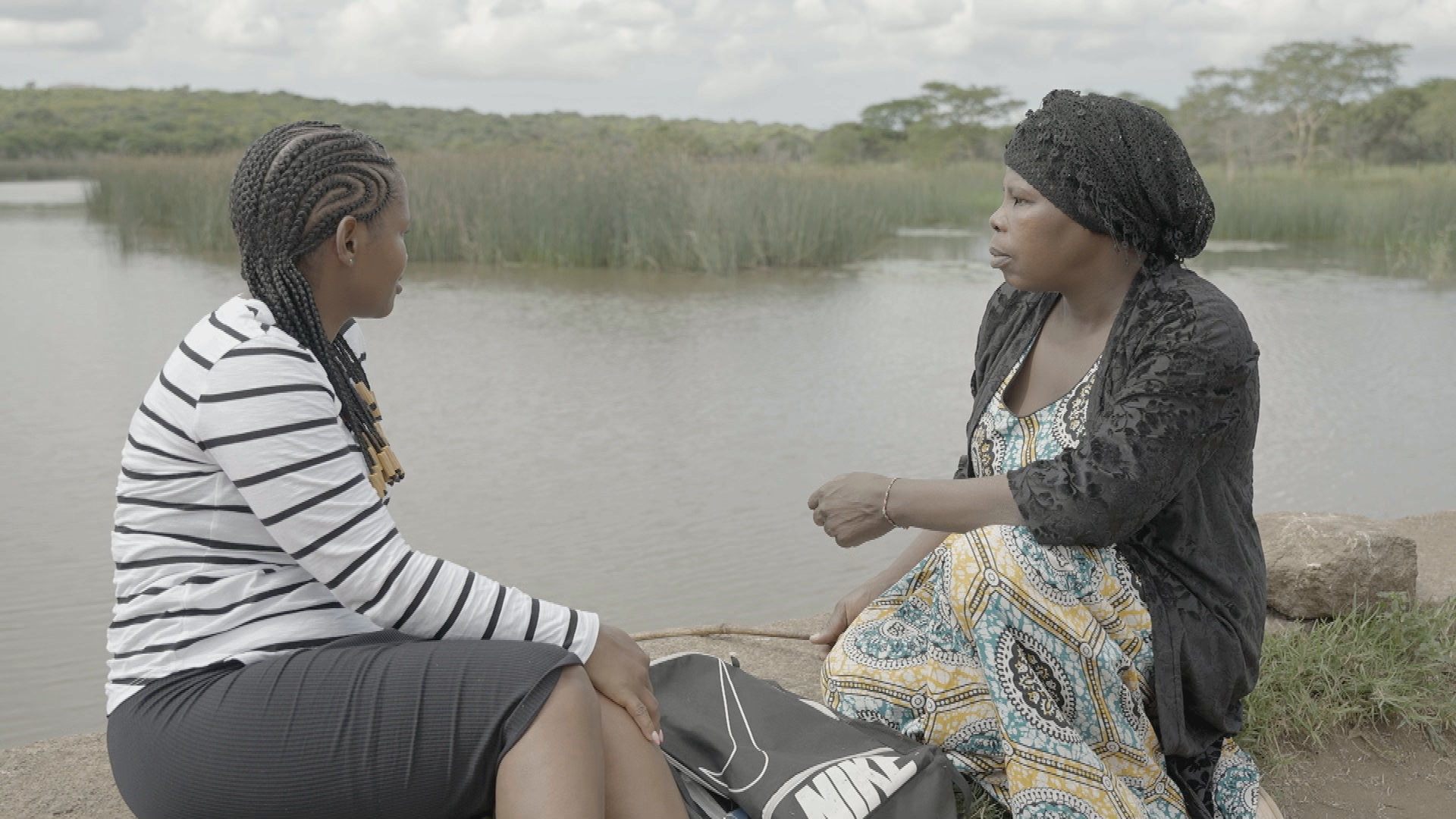
Conceptions of conservation are changing in Africa. The meanings change from place to place – in some instances, decolonised conservation looks like withdrawing from colonial powers. To others, it means rejecting conditioned feelings of inferiority and taking back people’s dignity.
In his Masterclass on decolonising conservation, Professor Thembela Kepe in May spoke about the need for decolonisation at three primary levels: narrative, knowledge, and practice. First, in narratives, this means deconstructing complex knowledge into simpler forms of understanding, and shifting how we tell stories from one that blames traditional systems to focusing on identifying the real root causes and the role that capitalist-driven consumption models play.
When it comes to knowledge on conservation, most of what we rely on comes from scientific expertise and data. Decolonising knowledge, however, means acknowledging and applying traditional knowledge, not just as a moral obligation, but because there is a proven history of its effectiveness in practice.
Finally, putting decolonisation in practice means asking ourselves, “How can we act differently?” This starts with recognition. Prof Kepe illustrates this concept through the isiZulu greeting for hello – sawubona – which translates literally to “I see you”, and the “you” is usually plural. It is an act of acknowledgment that shows that you recognise and value the person’s humanity.
This masterclass, therefore, focused on listening to participants sharing how conservation practices in their communities and countries centre the lived realities and the well being and livelihoods of marginalised communities in conservation, answering these questions:
- What areas in your own work do you believe represent decolonisation?
- What do you believe are areas that still need much work in terms of decolonisation?
Changing the narrative: a long, long time ago…
We have all heard stories about nature passed down through generations from our elders in many languages. As Prof Kepe shared, his grandparents may have been unaware of the terms “decolonisation” or “conservation” but they lived it and protected the land. Modern conservation practices, however, come from Western framing imposed on African ways of seeing and being.
Reclaiming our narratives begins with language, ensuring that communications, storytelling, and official documentation accurately represent the people they describe, both in how they are written, recorded, and interpreted. A participant shared that for her, this means having diversity in the newsroom, having journalists who look like and understand the spaces they report on.
Another participant, who works as a content specialist, pointed out how changing the narrative can be “risky”, especially in the early years of building your career. Only after years of building confidence and credibility are you able to “take more risks” and go against the status quo, reshaping the narrative on nature, history, and places.
Narrative change also comes with learning. Another participants, who was formerly a lecturer, shared how, in addition to teaching students about conservation practices, he helped his students develop a critical consciousness to see the problems and complexities of imported conservation practices.
Beyond classrooms, we heard a participant share how his with focuses on educating community members on the systems and structures in place, so that they are then better positioned to challenge them or use them to their advantage.
Over the years, narratives have also been used to villainise certain groups of people. An attendee shares how he sees a bias in many policies. For instance, when poor people occupy areas, it is termed land grabbing, but when affluent people do the same, it is called encroachment; this double standard impacts fairness and shows the need for a much-needed change in the narrative in policy making.
Knowledge: what do we know?
Prof Kepe shared that academia demonstrates just how broad knowledge can be. Decolonising conservation forces us to think about where knowledge comes from and who benefits from it. In conservation, knowledge often relies on scientific expertise and data, overlooking traditional knowledge. Decolonising conservation challenges this imbalance.
That’s why, a researcher participant in Prof Kepe’s masterclass, shared that rather than solely relying on GIS data from national parks, which might be abstract and exclusive, she uses participatory methods in her work to collect ingenious knowledge from the people who live in those communities.
This view was supported by a survey technician. In her work across communities, she uses local history to map out ancestral lands and boundaries, restoring histories of ownership and reclaiming memories relegated by colonial systems.
In many cases, the way knowledge is transferred is also colonial, with participants reflecting on how institutions’ capacity-building efforts focus on transferring knowledge rather than co-creation. Decolonising knowledge means co-creating, not prescribing. An attendee shared how this is reflected in the way laws are defined, with efforts in some communities to create customary laws that are defined by and for the people who use them.
There is also the question of what even qualifies as conservation knowledge, with art being gradually acknowledged as intellectual and used to tell stories and preserve traditions. Many participants agree with this perspective, and conservation work is starting to reflect that with artists helping to communicate community challenges and solutions.
Practice: what now?
Decolonising conservation is a process, one that includes changing certain practices, reverting to others, or creating new ones altogether. While some progress has been made, many agree that across Africa’s landscapes, there is still a long way to go.
One of the biggest issues is access and ownership of land. The land tenure systems in many communities often benefit the government and the wealthy, while marginalising indigenous people. Therefore, there is a consensus on the need to change laws and legal frameworks that grant undue power in the hands of a few.
The new laws and policies need to put people and their perspectives first. As a participant mentioned, this means making people feel they belong in their communities. Beyond tokenistic participation, it should allow people to define how they want to use, care for, and benefit from their lands.
This connects with how we define progress. Another valid point shared was that: development or prosperity should move from colonial ideas of profit to focusing on people and helping them live lives that they have reason to value. For many, it just means equity, dignity, and access to their ancestral lands. This must also extend into representation.
In conservation projects, locals are hired for jobs such as cleaning or maintenance, while jobs decision-making power are held by external persons.
Finally, this process cannot be done alone, but with collective effort. It’s asking ourselves:
- How can we show up for one another and provide support to the community of practice?
- How can we transform that into opportunities for one another?
Because ultimately, decolonising practice starts with solidarity.
Who is Prof Thembela Kepe?
Thembela Kepe is a Professor at the University of Toronto’s Department of Global Development Studies, Canada. Over the last few years, his research interests have focused on land rights, rural resistance politics, the politics of development, and political ecology in southern Africa and the continent as a whole.
