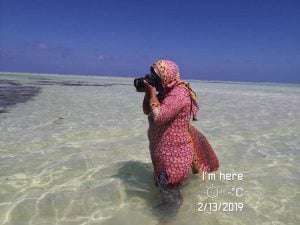
“I am a researcher and an activist, and at times I do not know which comes first. Staying with the trouble is what keeps me focused.” For Professor Moenieba Isaacs, philosopher Donna Haraway’s Staying with the Trouble: Making Kin in the Chthulucene has been an inspiring piece of work. The book explores the interconnected nature of human and non-human life, speculating on a future that switches the Anthropocene’s focus on human impact to the the non-human. This concept articulates Prof Isaacs’ approach to work over the last two decades and more.
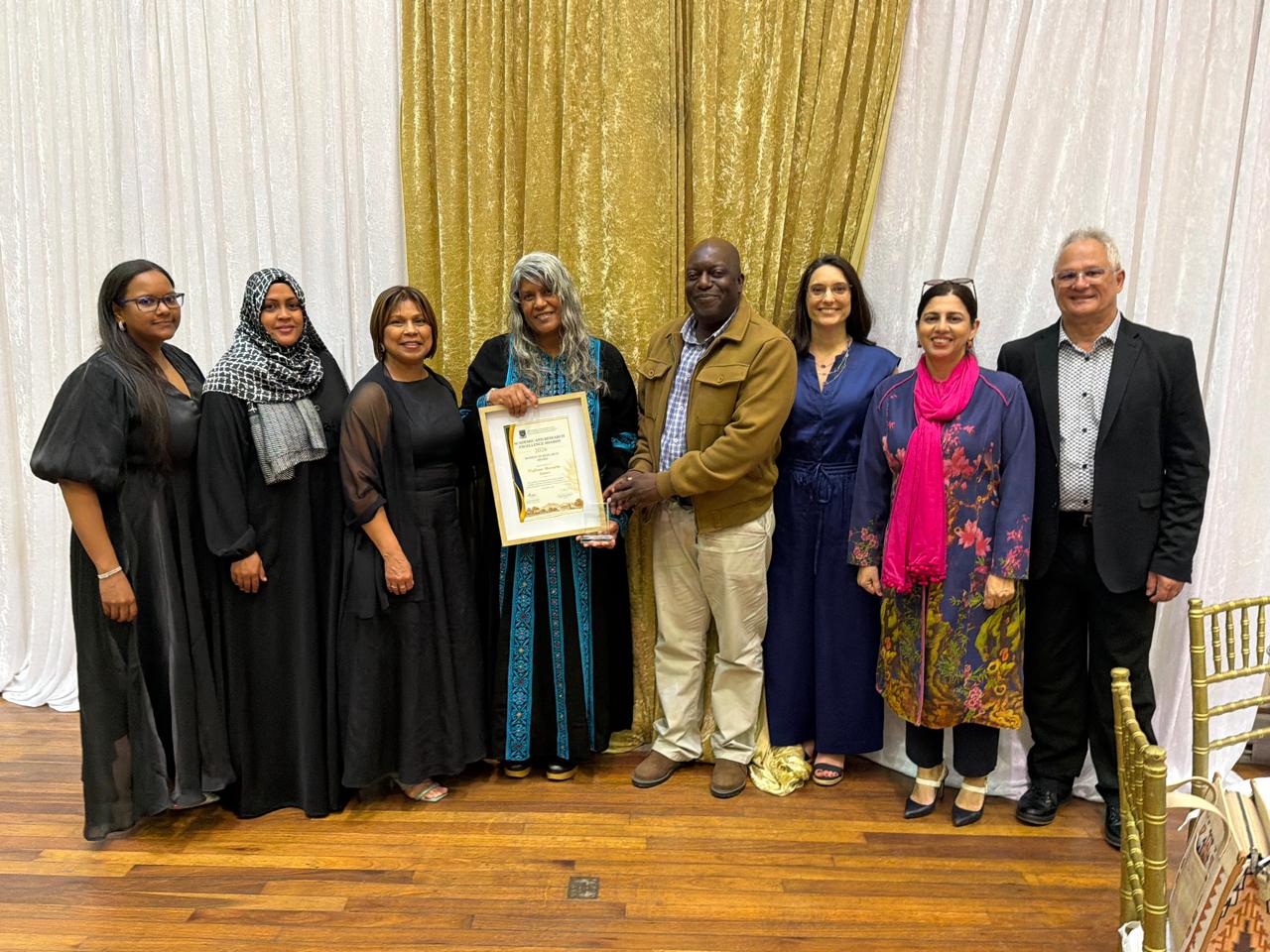
On 6 November 2026, Professor Isaacs received the Women in Research Award from the University of the Western Cape (UWC) for global impact, and her contribution to scholarship and mentoring. She is the principal investigator on numerous projects at the Institute for Poverty, Land and Agrarian Studies (PLAAS), and Academic Coordinator managing the Postgraduate Diploma, MPhil and PhD programmes, and serves as a co-coordinator of the accredited Political Economy of Land Governance in Africa short course that has trained over 400 land professionals on the continent. She is also the coordinator of the PLAAS Living Landscapes: New Thinking on Integrating Biodiversity and Social Justice accredited short course, which trains black conservation professionals to apply a decolonial lens to their work dominated by Western fortress conservation principles.
“Professor Isaacs exemplifies research excellence that makes women’s knowledge visible and challenges the unequal power relations shaping how livelihoods, voices, and rights count in marine policy,” UWC Deputy Vice-Chancellor (Research & Innovation) Professor Sarojini Nadar said in her recognition video on the awards night.
PLAAS Director Professor Ruth Hall has been Prof Isaacs’ colleague for over 20 years, and says this has been her approach to work in all that time.
“Moenieba has always brought deep personal and political commitment to her research, a warmth and support for junior researchers and students, and a creative practice of partnership with rural and working-class communities. This award amply recognises the important work that she has done in scholarship and engaged research. We are so proud of her, and celebrate her along with the rest of the University.”
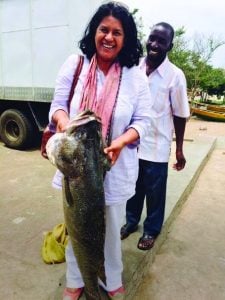
Staying with the trouble is central to Prof Isaacs’ research, teaching, mentorship, and activism. “In every academic course I teach, there is always one woman who is at risk of sabotaging themselves. They are present, do the work, and are more than capable but they need a lot of support to learn how to write and to adjust to the kind of reading required. I have to work on their confidence to get them to the finish line, and once they are over that hurdle, the next step to a PhD becomes easier.”
In the small-scale fishing communities where Prof Isaacs has dedicated her life’s work, staying with the trouble has meant building women’s confidence as they learn how to create and maintain their own enterprises. The women in these areas are often at the financial mercy of men and are left to care for themselves, households, and their children alone. Many are entrepreneurial but ignored. Hailing from Ocean View, a township created during apartheid for communities displaced from Simons Town, Glencairn, Noordhoek and Fish Hoek, this is a reality that Prof Isaacs grew up in. “These women are told their whole lives that they are not good enough. For them to be able to go out into the economy on their own, I ensure there are interventions to build them up.” Prof Isaacs does this through documenting these women’s lives, desires, and their resistance to structural violence. She’s provided them and other communities with useful research that supports them in different ways, whether by providing a translator for major court cases, or turning her research into different formats and languages so everyone can understand it.
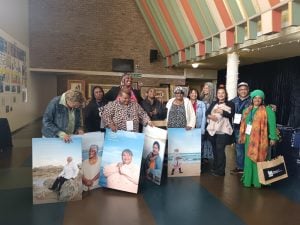
In her research, Prof Isaacs maintains that disruption is her desired outcome. Her work in biodiversity and conservation focuses on social and spatial justice for local people in these globally declared areas, and the effects policies and their enforcements have on them. Her political economy lens is markedly different to current applications of conservation around the world, and her work forces those in power to consider justice when making decisions. This is trouble that is fought by companies, corporations, and governments. Her strategy is to continue producing high level research, amplifying the pleas of the communities where she conducts her work on regional and global policy platforms. Participation action research through a slow methodology makes this possible: the researchers on her projects are embedded in these areas over years, where they are required to speak the relevant languages and understand and partake in locals’ cultural activities while gathering research.
“It builds relationships, trust, and respect. We don’t extract and run. We stay with the trouble, and I use my relationships with communities for policy messages and research products. Gaining those communities’ trust helped me form the ‘blue justice’ concept, which I use to inform my work in social and spatial justice.”
At the same time, she has dedicated time to working with black women researchers. She underscores that the work to support them in transitioning to the field, write academically, and present at conferences on all levels is vital to advancing education and decolonising research. Having these young women lead on policy briefs and research reports has been a core focus for Prof Isaacs in the last two years, and goes hand-in-hand with her research and activist identities.
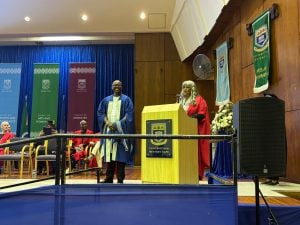
“As a young researcher, I saw myself in two different spheres: one speaks to where my heart is, and the other that keeps me resourced to do that work. The activism work is part of the academic work. To support and assist communities, help them through policy processes, articulate their inputs into affidavits, and challenge power – I’ve always seen that in addition to my work.”
By staying with the trouble, Prof Isaacs achieved her PhD and a C2 NRF scholar rating at UWC – the institution she calls her political home. She has contributed to policies in South Africa, on the continent, and globally. She formed part of the UN Committee on Food Security’s High-level Panel of Experts on Food Security and Nutrition on the Role of Sustainable Fisheries and Aquaculture for Food Security and Nutrition, was part of the United Nations Office on Drugs and Crime expert panel on fisheries crimes, and conceptualised and introduced the notion blue justice for small-scale fishers at the World Smallscale Fisheries Congress. She has interrogated the Voluntary Guidelines on the Governance of Tenure in Land, Fisheries, Forestry and Indigenous Communities for the Civil Society Mechanism; is part of the Programme Committee of the Marine and Coastal Science for Management programme; and is a member of the Scientific Advisory Committee on World Wildlife Crime Report.
Moving forward, Prof Isaacs stays with the trouble still, and plans to build on her current work that keeps justice at the centre of her impact on the people she works with, and the world.