
By Siphesihle Mbhele
There is a global myth that young people do not fish. This myth has been driven by decision makers who invisibilise young people’s roles and voices, creating false narratives that they are not interested in nature-based livelihoods and eroding their interest and work in the cultural and historical value of nature and natural resources. These have been used as justifications to exclude certain people from nature. The myths have led to youth non-representation, and in turn young people who are natural resource users are removed from key decision making and advocacy processes that impact their livelihoods. At the same time, the Constitution protects the right to food, meaning all fishers of all ages have the right to practice this livelihood.
There are several debates in the scholarship of conservation and natural resource governance that focus on how policies on the governance of natural resources in rural and urban contexts have resulted in the loss of access to livelihoods. This research has seen the emergence of conceptual understandings that help us make sense of violence and the privatisation of communal resources. However, while this broad view is important in unpacking injustices in natural resource governance, it has often overlooked complexities existing within these communal contexts, these are the voices of marginalised young people, who play a pivotal role in the value chain of nature-based livelihoods, particularly fishing.
The Nibela community in KwaZulu-Natal, South Africa, is a rural indigenous community of fishers descended from people who were forcibly removed from the KwaMbila and Nhlozi areas, with the last removals happening in the 1970s. This generation of indigenous people were forcibly removed for their land to make way for the creation of a conservation area, which is now iSimangaliso Wetland Park, a UNESCO World Heritage and Ramsar site. This is a peninsula-shaped landscape which is surrounded by the Nibela lake and is part of the territory of the IWP’s marine protected area component.
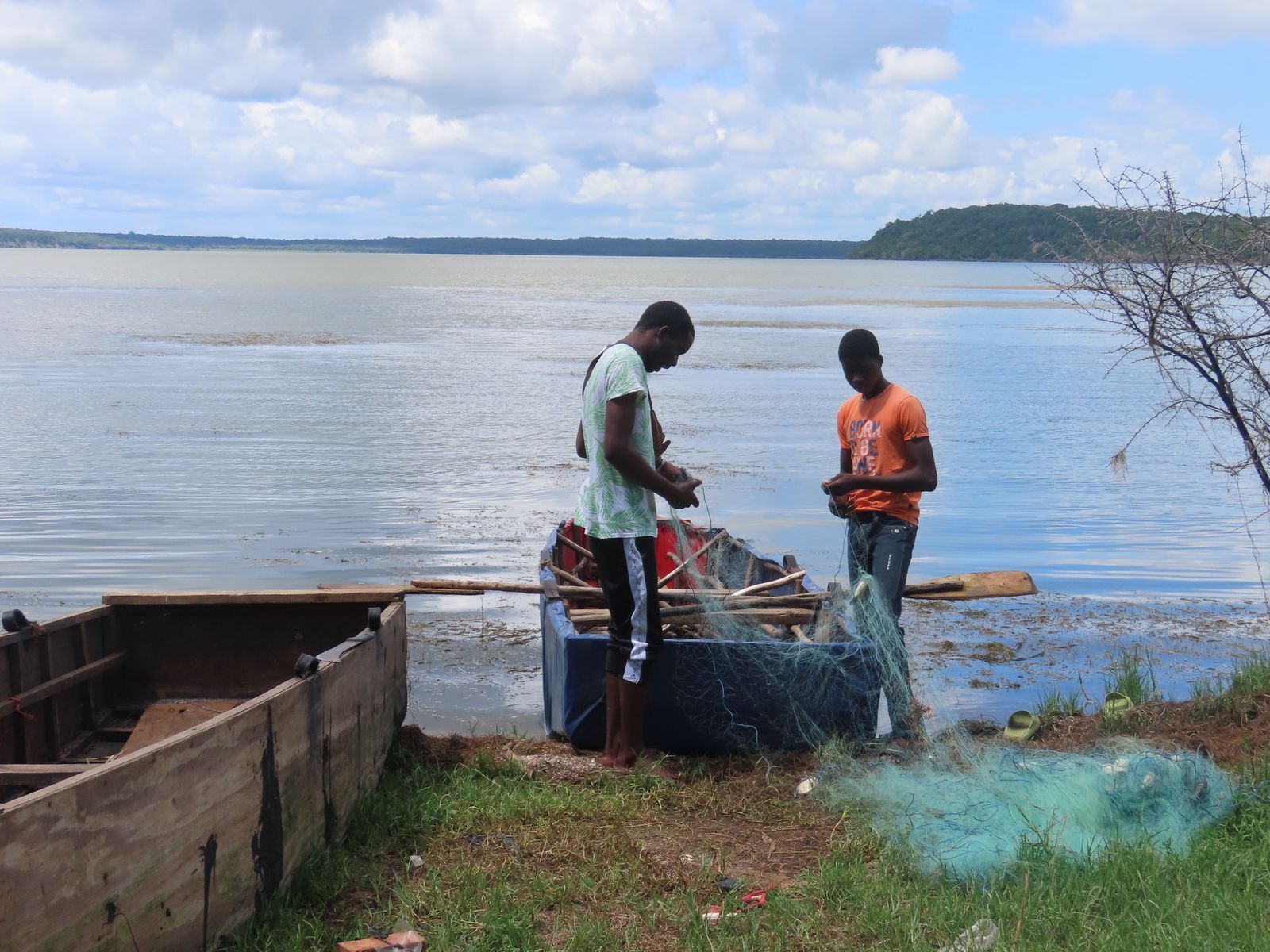
In the context of Nibela, youth are a critical part of nature-based livelihoods, in particular, fishing. They are considered the “manpower” of the community and are hired by veteran fishermen and women to use their boats to enter the lake, fish and thereafter share profits. Young people in some instances receive a 10litre bucket of fish as payment for their work, which they take home to family and contribute to the household sustainability. Young women are also involved in nature based livelihoods through the incema and qumbe grass cutting, mat-making, and frying and distributing fish. Usually taught these skills at a young age when accompanying their parents and grandparents to the lake, these young people grow to appreciate the value of nature and see it as part of their identity and a source of income.
Some of the barriers to access of certain spaces are community- and local-level barriers based on the assumption that young people are not wise enough to lead, but these are also largely influenced by policies that have ridiculous requirements that structurally disable young people from participating. One young person from the Nkundusi fishing community in Hluhluwe, KwaZulu-Natal, South Africa, reflected during a community meeting called by the fishing co-op executive: “You are always going to meetings alone with iSimangaliso, you make decisions here alone about fishing yet we are the ones who are always in the waters and you do not include us, why is that so?”
In the face of high unemployment rates in South Africa, the youth in the iSimangaliso region turn to natural resources as a means of income, ensuring that their families are fed. Involvement in nature-based livelihoods is not only reserved for older youth, but it is also an after school activity for young girls and boys who are still school-going, and in some instances school is missed because a young person might have spent the night camping in the lake to fish or collect grass. A teacher from the local high school Ntulabakayise Secondary School reflected that at times they would be teaching and some learners would fall asleep, which is usually an indication that the learner had been out fishing all night.
The main sources of livelihood in the Nibela community – fishing, qumbe, ikhwani and incema grass cutting – require access into the lake, and there are several policies and restrictions that prohibit their entry for these livelihood purposes. This is primarily due to the park’s marine conservation mandate. These restrictions on access to nature have prevented communities from practicing key livelihood activities that are part of their identity, some of which are important for ancestral and spiritual purposes. This is fishing, grass cutting, hunting and the harvesting of medicinal herbs for healing and rituals. In resistance to these regulations and also due to desperation and the need to access their livelihoods, these young people have resorted to fishing at night, entering the lake in groups and camping in the park overnight in order to harvest, fish and have enough for subsistence as well as selling to outside communities. As a result, many resource users have had experiences of violence and arrest by park authorities. Young fishers have been at the coalface of violence by conservation authorities, which has led to the death of two young fishermen who were killed by rangers while entering the park to fish. These are two of many experiences of young people who on a daily basis have to hide in the bushes and in boats while trying to sustain their livelihoods. Other incidents have resulted in beatings and confiscation of tools.
Young people in nature-based livelihoods experience structural barriers which do not recognise their role and contribution in their community livelihoods. The small-scale fishers policy requires one to be 18 years and older, as well as having 10 years of fishing experience, in order to form part of a co-op and receive fishing rights. These are structural barriers that deepen exclusion and ensure that young people’s voices and challenges do not find expression. They lack the consideration that most fishers in this region start fishing out of necessity due to hunger and the need for food in their households, all before they turn 18 years old. But still, young fishermen are considered either too young for recognition, or too inexperienced to pass through the verification process required to join a co-operative. In order to ensure adequate representation in policy and decision making spaces, South Africa needs a policy and governance approach that is inclusive of everyone, regardless of their age or gender, to ensure that no voices are silenced and no one is left behind in the process of governing. Young people deserve to be represented in co-op leadership structures, community councils and key committees that influence policy making and decisions on the governance of natural resources.
Editing: Deshnee Subramany
