
Maud Sebelebele
“It would be good to set foot on where I grew up, where my family is from. I am happy to go with you, to visit the areas. My heart will find peace”.
I met Mme Sarah Sithole* while investigating how people and families connect their identities, memories, and cultural practices to the Mapungubwe Cultural Landscape in Limpopo, South Africa after historical and ongoing marginalisation processes. The focus was on contemporary forms of belonging found in the landscape as part of the Institute for Poverty, Land and Agrarian Studies (PLAAS) at the University of the Western Cape’s Living Landscape in Action project. The Living Landscape in Action project researches social and spatial injustices against communities living in and next to protected areas, and has been working in this area for over three years.
The Mapungubwe Cultural Landscape is home to several commercial farms, the Mapungubwe National Park, and some ancestral lands. These ancestral lands now form part of the park, which is managed by South African National Parks (SANParks).
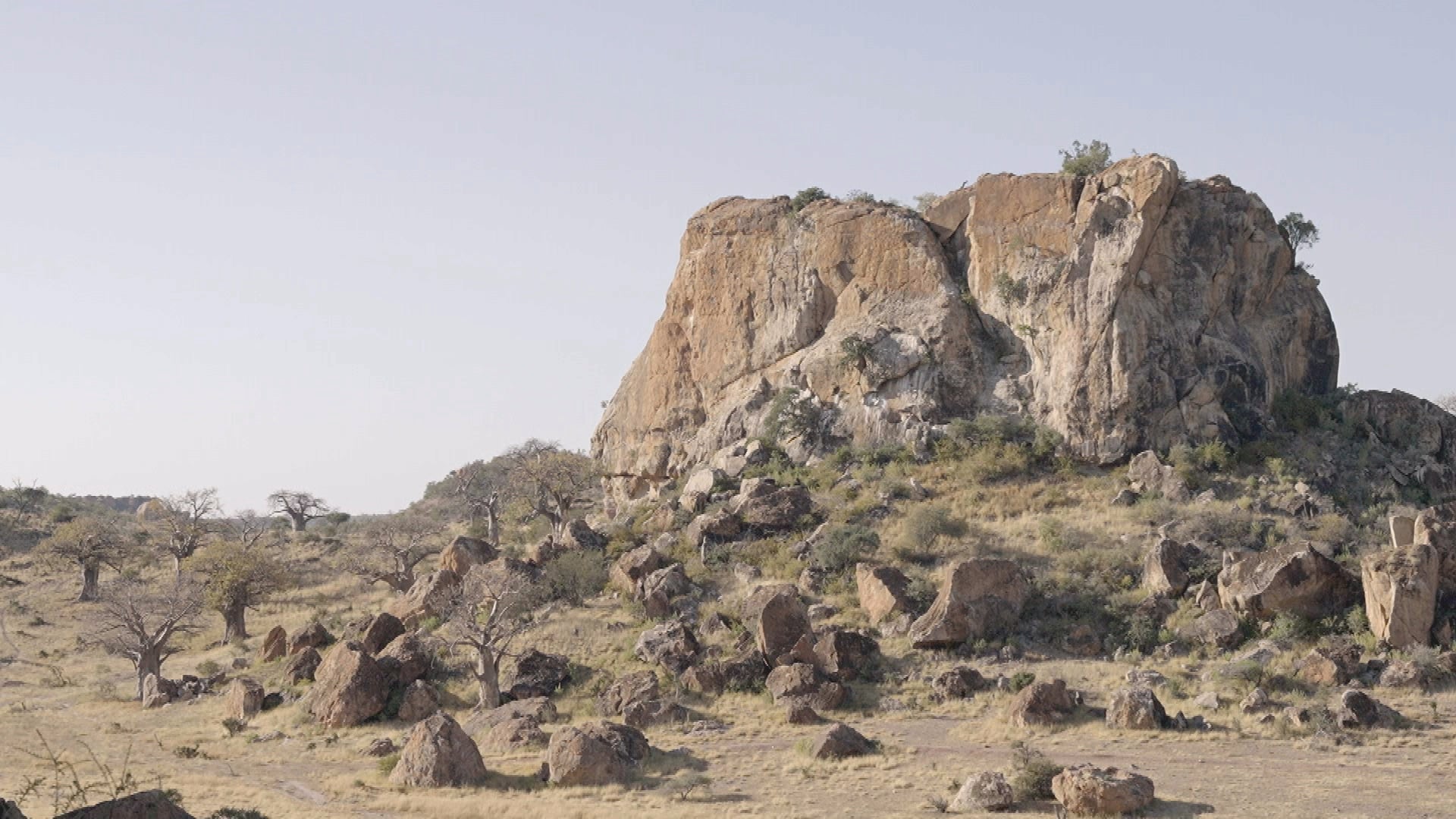
Mapungubwe Hill. Picture: Shoot the Breeze for PLAAS
Mme Sarah is a direct descendant of the Mapungubwe Cultural Landscape. I explained that I would interview her during a cultural guided walk or drive along the landscape, where she would lead us to a place of significance for her, and share her life histories and her connection to the location.
Mme Sarah’s excitement to visit her ancestral homestead declined. Her biggest concern was asking permission from her elder male family member to enter the ancestral land and visit her homestead. She is a member of one of the families that lodged a claim to the land in 1998 where her homestead is, but was not part of the key group of people that lodged a claim to the land and therefore feels she has no right to access it independently.
Mme Sarah was born to a less established family than some others in her clan. From her experience, decisions about entering the ancestral area can only be made on her behalf by her mentioned elder male family member, and in some instances, selected more established male members of her clan. To her, government officials recognise her male family member as elite and she is an unrecognised member of the family, a subject that lays heavy on her heart.
“What can I say? It is part of tradition.”
In the last three years, we have learnt that Mme Sarah’s reflections are not singular; her insecurities about gender roles and family hierarchy were shared with us by many women and others in the area. Mme Sarah has full right to request access to her ancestral land and homestead through the SANParks system on her own. But uncertainty about who can access land, the layered dynamics of authority, and the broader challenges faced by many in the region – where gender, family hierarchy, and government processes intersect – complicate her sense of belonging and make her feel unimportant and voiceless.
*We have used a pseudonym because Mme Sarah asked PLAAS to keep her identity confidential as she was afraid of causing conflict.
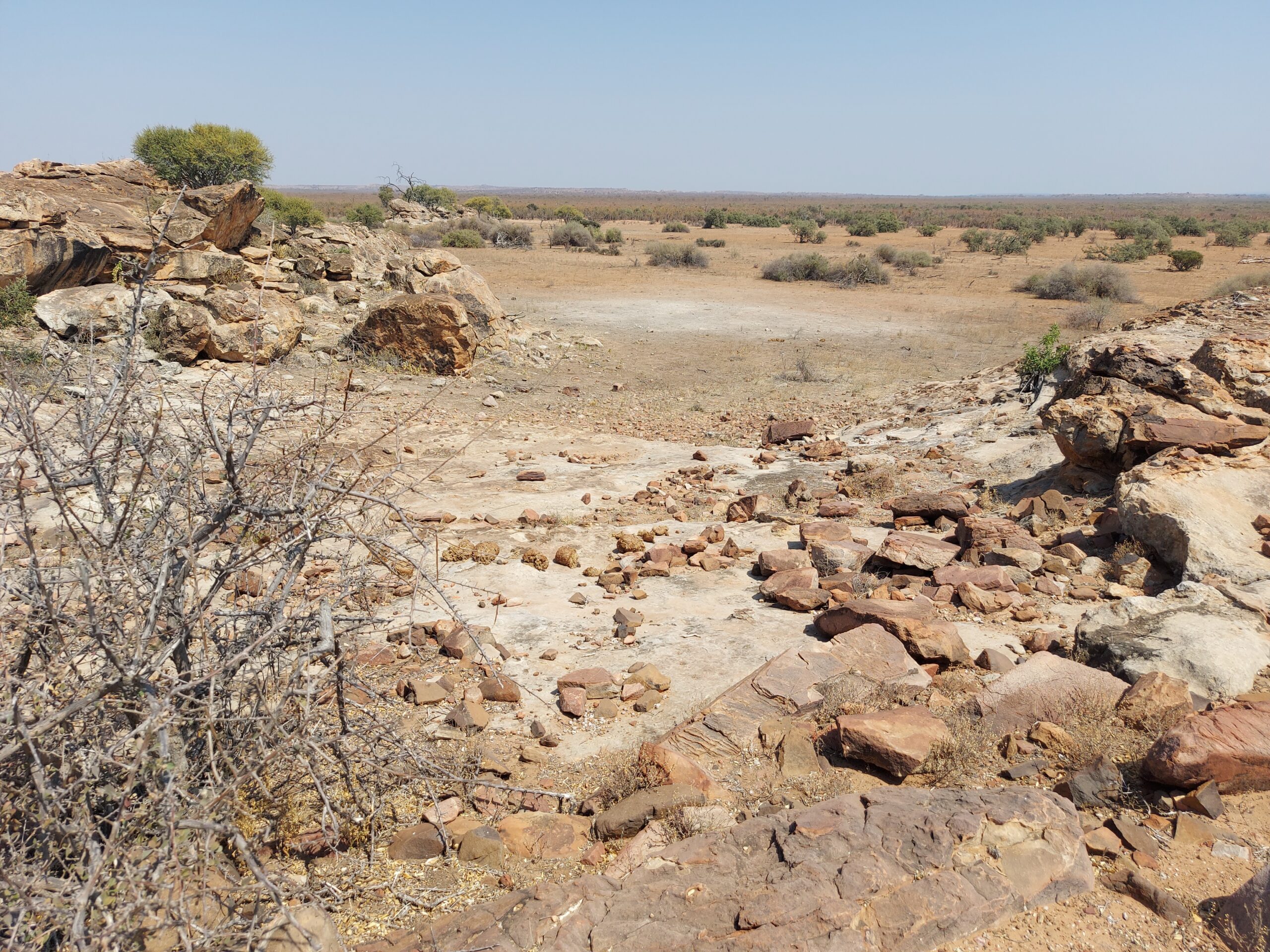
Homestead structural remains in the Mapungubwe Cultural Landscape show where people lived in the area. Foundations and other remains are protected. Picture: Maud Sebelebele, PLAAS
Mr Chauke – the lucky man?
Mr Chauke lives with his wife and children in Polokwane. His parents were labour tenants on a commercial farm in the Mapungubwe landscapes, where he was born. The farm he grew up on was sold and turned into a game farm. In 2023, Mr Chauke approached me about helping him access burial sites on farms in the area.
“I left the farm very young in my teenage years – immediately after my mother’s funeral. My sister had died years before my mother. I have not seen their graves in 30 years. I have tried on many occasions to visit the graves but I always find the gates locked. I am told that the owner does not live on the farm and I do not have any contacts to reach them and request to visit the gravesites.”
He remembered the area at a different time, when communities felt more protected from animals. Mapungubwe Cultural Landscape is also a site of human-wildlife interactions that need management.
“I used to ride my bicycle on the R521 (Musina to Pontdrift road) tar road to visit the many farm communities that lived here. Back then, these wild animals were fenced in, and one could easily move around.”
Mr Chauke had tried to access the farm on several occasions, with no luck.
“I visit this landscape frequently, especially when I find time off work. I am tied to it because I grew up here and my family is buried here. This weekend I came with my son, and as usual we passed by the farm hoping to find someone. I want to show him, my wife and his siblings where I grew up and where his aunt and grandmother are resting.”
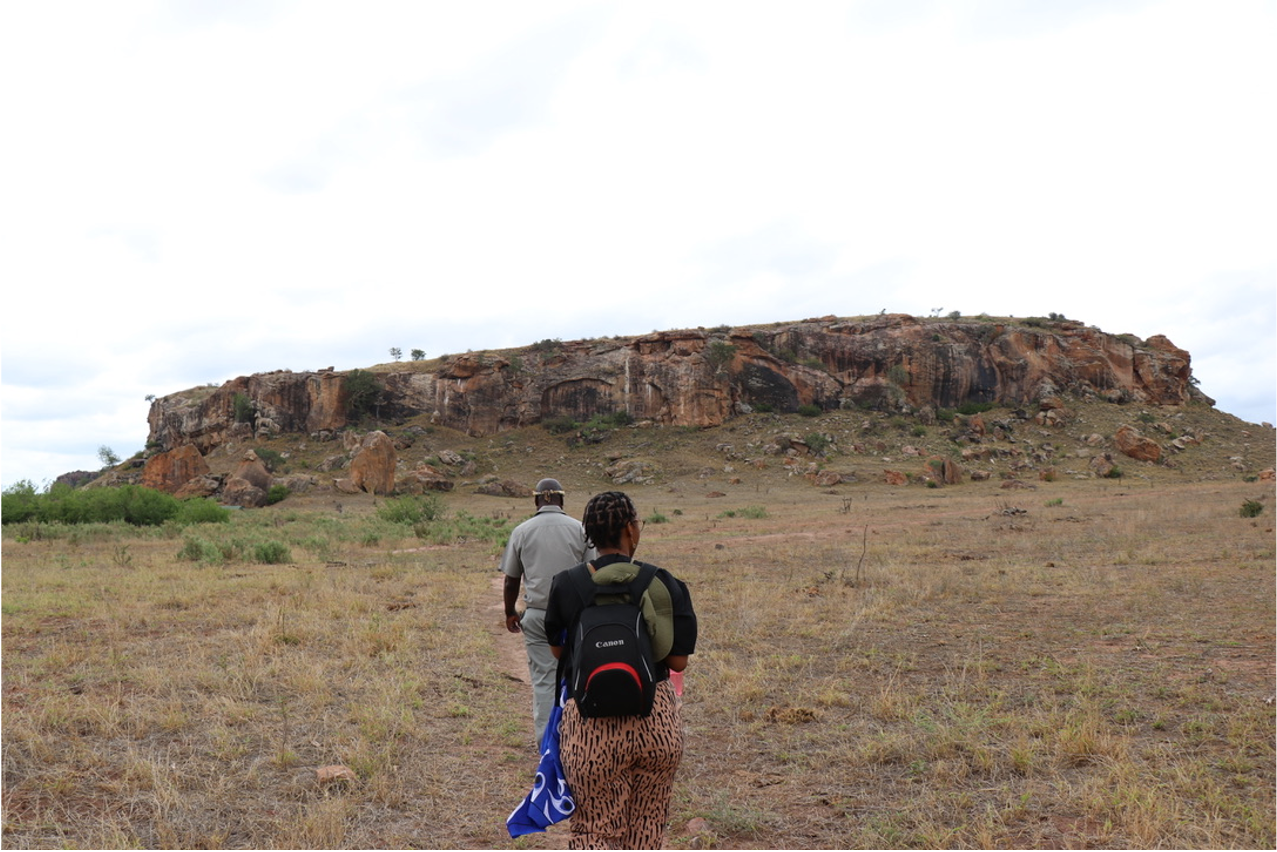
PLAAS research associate Maud Sebelebele in the Mapungubwe Cultural Landscape. Picture: PLAAS
PLAAS worked with caretakers on this particular farm. We negotiated with the caretaker about Mr Chauke’s story, who said that visiting the gravesite was important for the family and should be attended to immediately, and that finding the owner could take a longer time.
Between the feelings of relief after the breakthrough and excitement, Mr Chauke still felt unsafe. The landscape is home to scores of elephants and other wild animals and has changed from the time he lived in the landscape. After assurances that the gravesite’s location was protected, Mr Chauke was able to visit his sister and mother the next day for the first time in 30 years.
In many instances in Mapungubwe Cultural Landscape, farm owners leave the farms to be managed by tenants and caretakers, while they live in another town, province or continent. So, although Mr Chauke was ‘lucky’ on that day, his access to his family graves are still insecure as it is determined by the willingness and availability of the caretakers and farm owner.
The Mokwena family and a case of insecurity
The Mokwena family had a similar story to Mr Chauke’s, but they weren’t as fortunate. Their family members were buried on a private commercial farm whose owner they could not find.
I accompanied the Mokwena family to the farm to help negotiate a visit to the burial site. This farm is managed by tenants who are relatives of the Mokwena family. They have visited the gravesites on this farm as a collective before.
Even though they are the caretakers of this farm, they weren’t comfortable allowing people in without the farmer’s permission first, and asked us to return on a different day to see the farmer when he was on the property. We asked the farm owner for a suitable date when the family could clean their ancestral graves and erect tombstones. The farm owner said there were no graves on his property, and denied that the family had ever come to the farm to ask to visit the graves before.
“He is lying. He knows of the graves; we have visited the graves on multiple occasions before and he knows about it. He is just afraid of losing his land”.
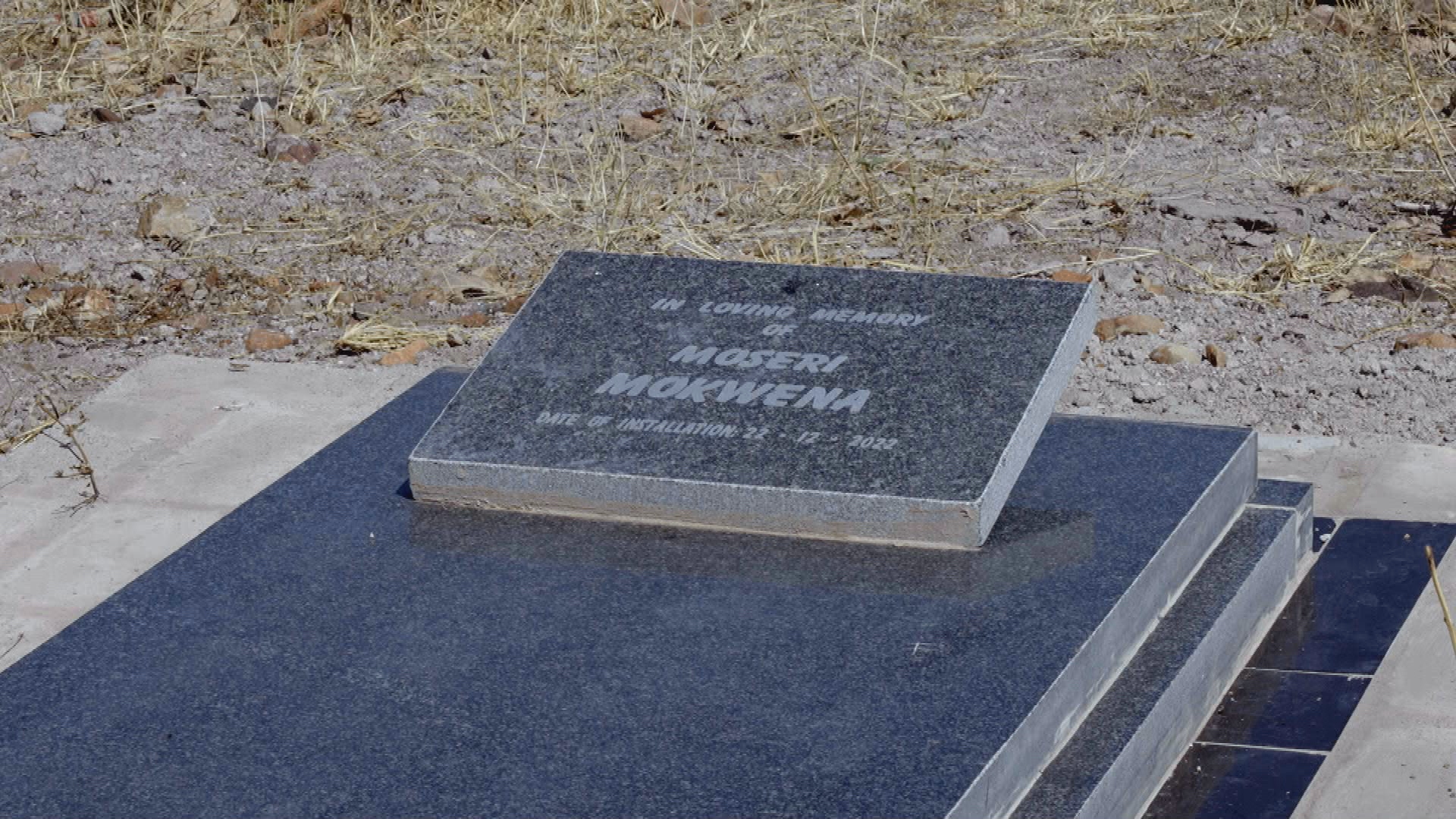
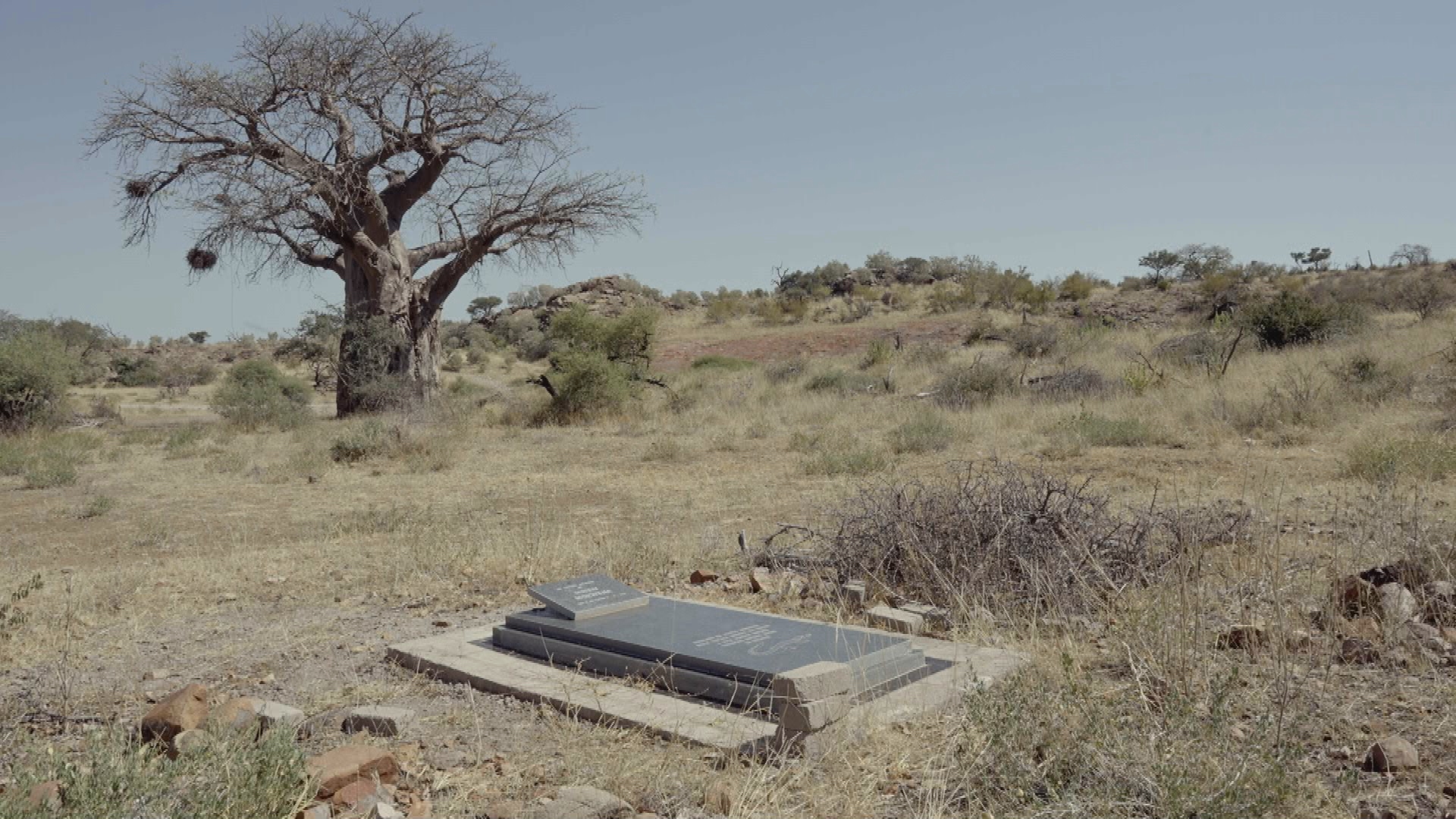
The Mokwena family has gravesites in the Mapungubwe Cultural Landscape that they aren’t always allowed to access, and are at the mercy of landowners to do so. Picture: Shoot the Breeze for PLAAS
Insecurities around land ownership and access persist in the region. The Mokwena family’s visit to the farm was in September 2023 – within the years when South Africa’s Expropriation Bill was under deliberation to replace the apartheid-era’s Expropriation Act of 1975. Both the Mokwena family representative’s and the farm owner’s responses reflected the ongoing tensions over land, access, and recognition of longstanding conflicting histories. South Africa’s new Expropriation Act 13 of 2024 has fueled these insecurities, especially between people of different races, even though the Act is clear that no land can be expropriated without legal procedures.
Even relationships between caretakers and community members, who are often from the same family groups, do not guarantee that people would have access to these spaces. Caretakers are put in the precarious position of displeasing either their community and families, or the people who pay their salaries and are their landlords. Between caretakers and the land owners themselves, historical dispossession and complex tenure arrangements contribute to both sides’ fears.
The Mapungubwe Cultural Landscape is a United Nations Educational, Scientific and Cultural Organization (UNESCO) world heritage site that is rich in biodiversity, archaeological history, and ancestral sacred sites. It is located in the north of Limpopo Province, South Africa, and borders Botswana and Zimbabwe. The landscape hosts the Mapungubwe Hill and K2 – regarded as the great Mapungubwe Kingdom’s capital created during settlement between 900 and 1300 CE. The landscape contains many historically important locations, with paintings by San people, sacred mountains, hills, caves, and ancestral gravesites.
Beyond the Mapungubwe Hill, structural remains of abandoned kraals and old homesteads are spread out in multiple locations within the central farms of the Mapungubwe Cultural Landscape. A walk or a drive in the landscape reveals scattered remnants of broken clay pots, and grain grinding rocks, graves, and ancestral gravesites.
The remains belong to a large number of different people:
- People who lost claim to the land during the colonial era;
- People who lost claim to the land through the apartheid era’s The Natives Land Act of 1913 and commercial farms were established;
- People who were removed and dispossessed when commercial farmers sold their land to non-governmental organisations, such as Peace Parks Foundation and World Wide Fund for Nature; and
- The South African state, which created the Mapungubwe National Park and the Greater Mapungubwe Transfrontier Conservation Area in the mid-1990s.
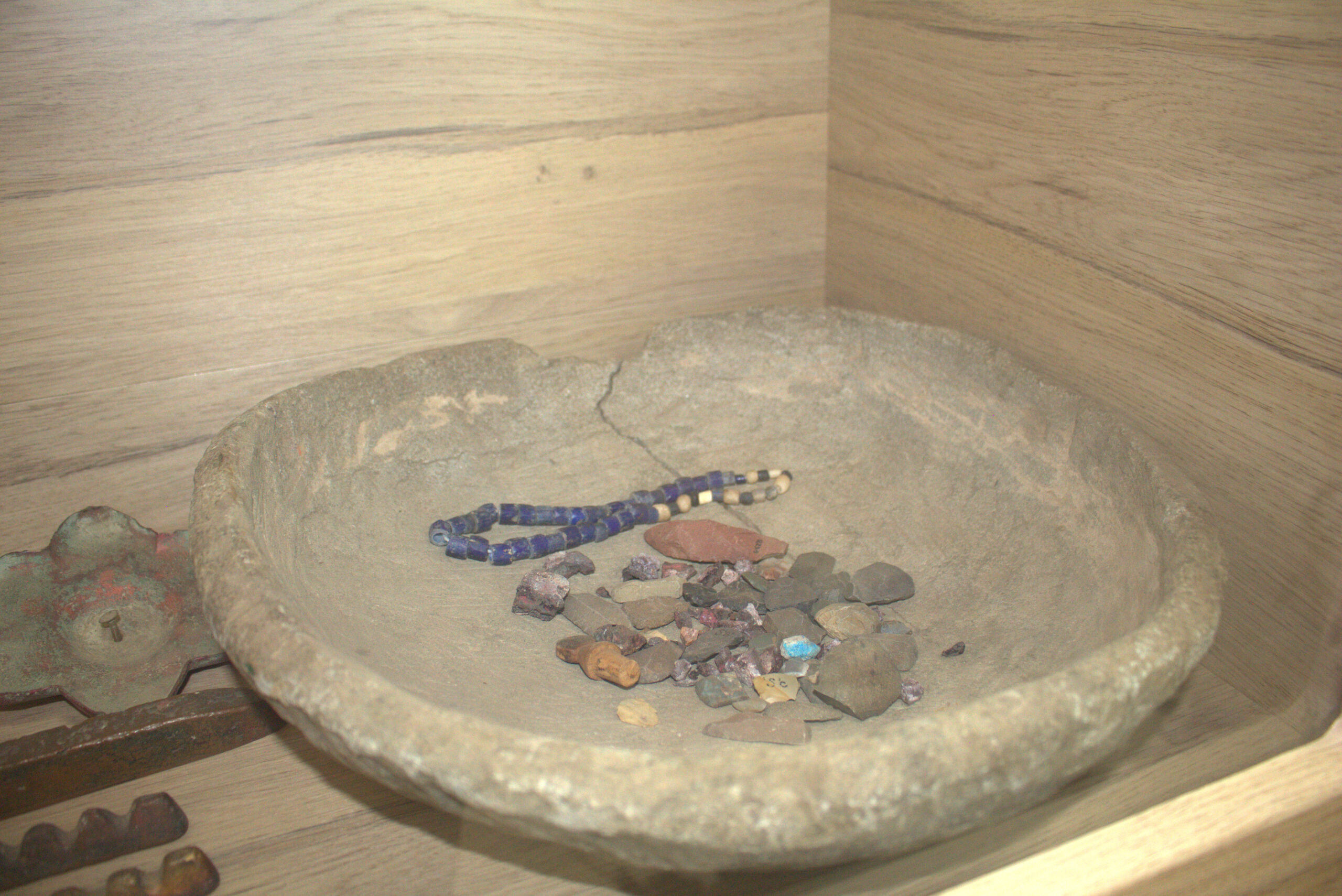
Beads and broken clay pot pieces placed in a clay pot. These items were collected on a farm in the Mapungubwe Cultural Landscape. and are with Jack Klaff Auctioneers in Musina. Picture: Maud Sebelebele, PLAAS
The physical remnants and their geographic locations are crucial evidence in land claims proceedings as per South Africa’s Restitution of Land Rights Act 22 of 1994. Communities whose families and ancestors were impacted by the Act submitted claims on multiple farms in the Mapungubwe Cultural Landscape, including those that are managed by SANParks.
The landscape is also considered a “migration area” by community members. They highlight that some of the gravesites belong to farm dwellers and farm labourers who came from local regions of South Africa, such as Soutpansberg and Venda, and neighbouring countries Zimbabwe, Botswana, and Zambia who travelled to the area to work on commercial farms.
Access as heritage
Den Staat farm is a communal farm restituted to the Machete Community Property Association (CPA) in 2010 – the only restituted farm in the landscape. Over 160 people live there, including land claimant descendants, farm labourers, and contract workers from interventions such as the Expanded Public Works Programme.
On 6 September 2025, during Heritage Month in South Africa, PLAAS screened its new Living Landscapes in Action research documentary, Indalo Yethu: Our livelihoods. Our nature. Our heritage at Den Staat farm.
I lived in Den Staat farm between 2022 and 2024, working as a researcher through the slow methodology. I worked with herders, crop farmers, young people, elders, farm labourers and farm dwellers, collecting ethnographic evidence of how they are impacted by living next to a conservation area. The results of our work are a key aspect of the Indalo Yethu: Our livelihoods. Our nature. documentary, to which the Den Staat farm community has made significant contributions where they can see the impact of their work. Mr Andris Mokwena, a representative for the CPA’s chairperson, Mr Patrick Machete, said the film highlighted that Den Staat’s residents were not alone in their fight to access their own land for their desired needs.
“It is good to see that our struggles and livelihood needs are noted, are not unique and are going to be seen by other nations. Likewise, we the community of Den Staat need to unite so that we can fight the poverty that we are facing.”
Looking towards 2040
SANParks’ 2040 Mega Living Landscapes vision is to include Mapungubwe in its protected areas plan. As part of the Kunming-Montreal Global Biodiversity Framework (GBF) 30X30 targets, South Africa aims to have 30 per cent of terrestrial and inland water areas, and of marine and coastal areas protected effectively by the year 2030. But expanding the protected Mapungubwe landscape means more people will lose land – in an area that is already rife with disputes over ownership and access.
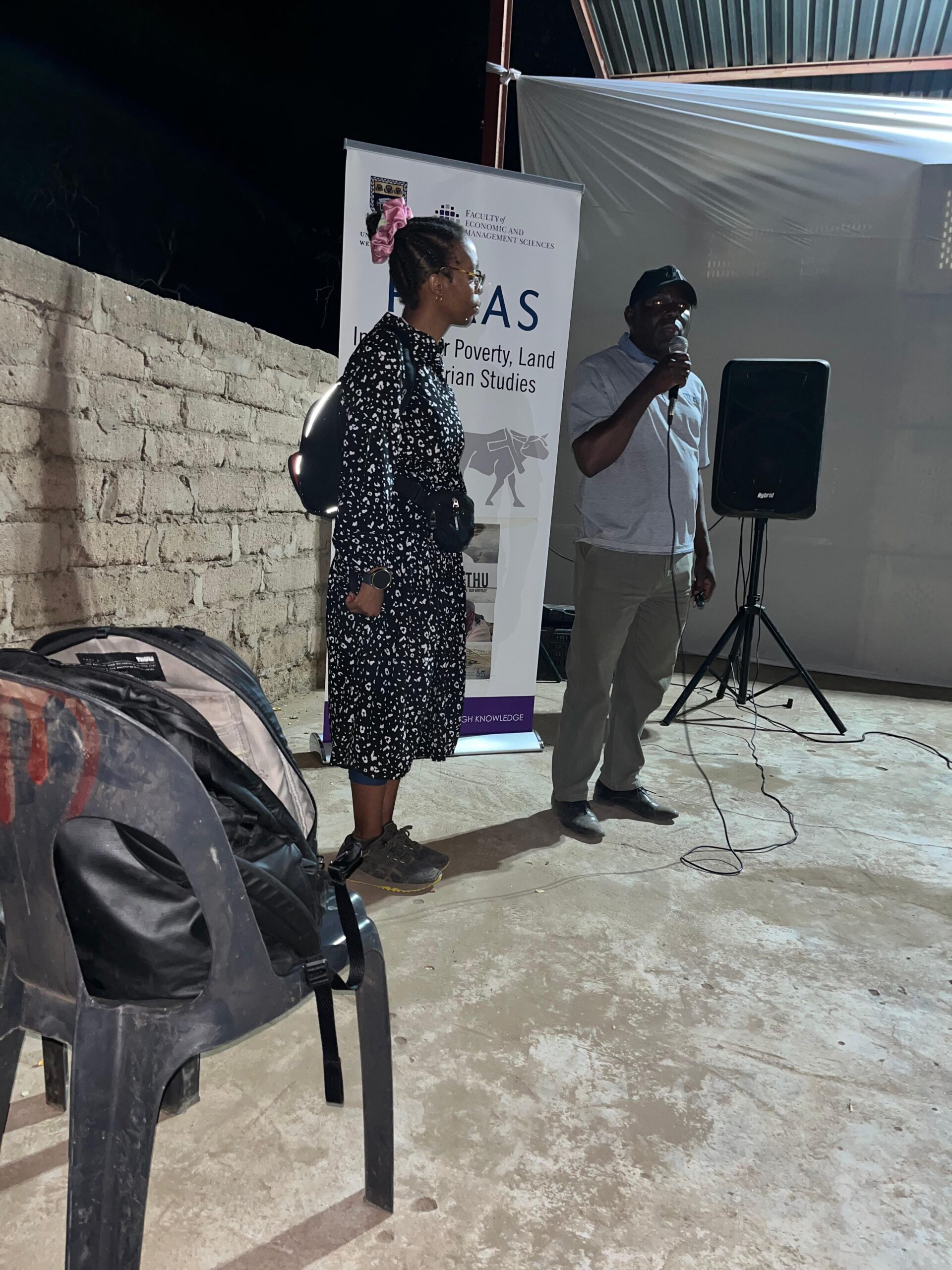
Andris Mokwena represented the Machete Communal Property Association Den Staat chairperson at the Indalo Yethu film screening at Den Staat farm. Picture: Professor Moenieba Isaacs, PLAAS
People’s ability to access sacred sites for rituals, ancestral homesteads, and family burial sites is not only about physical entry. It is deeply tied to identity, memory, and connection to their ancestors. For communities connected to and living in the Mapungubwe Cultural landscapes, these activities (along with accessing natural resources, hunting, fishing and herding) lay at the heart of sustaining a tangible connection to one’s lineage, cultural identity and heritage (Sebeleble et al, 2025).
But the fight for access also reflects contestations over land, identity, cultural practice, and heritage. Everyone in the landscape has connections to it that are mediated by overlapping gendered, traditional, cultural, legal, and institutional barriers. These experiences are not isolated; they are shaped by a combination of historical land dispossession, current administrative and legal barriers, and layered family dynamics.
For SANParks’ expansion plan to be successful, all displaced people in the area need these institutional and social barriers addressed.
For people like Mme Sarah, Mr Chauke, and the Mokwena family, these are not simply “measures”, but could be life-changing interventions for generations to come.
References
Sebelebele, M., Thakholi, L. and Isaacs, M., 2025. Living landscapes in action: why livelihoods, culture, and heritage matter for the people of the Mapungubwe cultural landscape, Limpopo, South Africa.
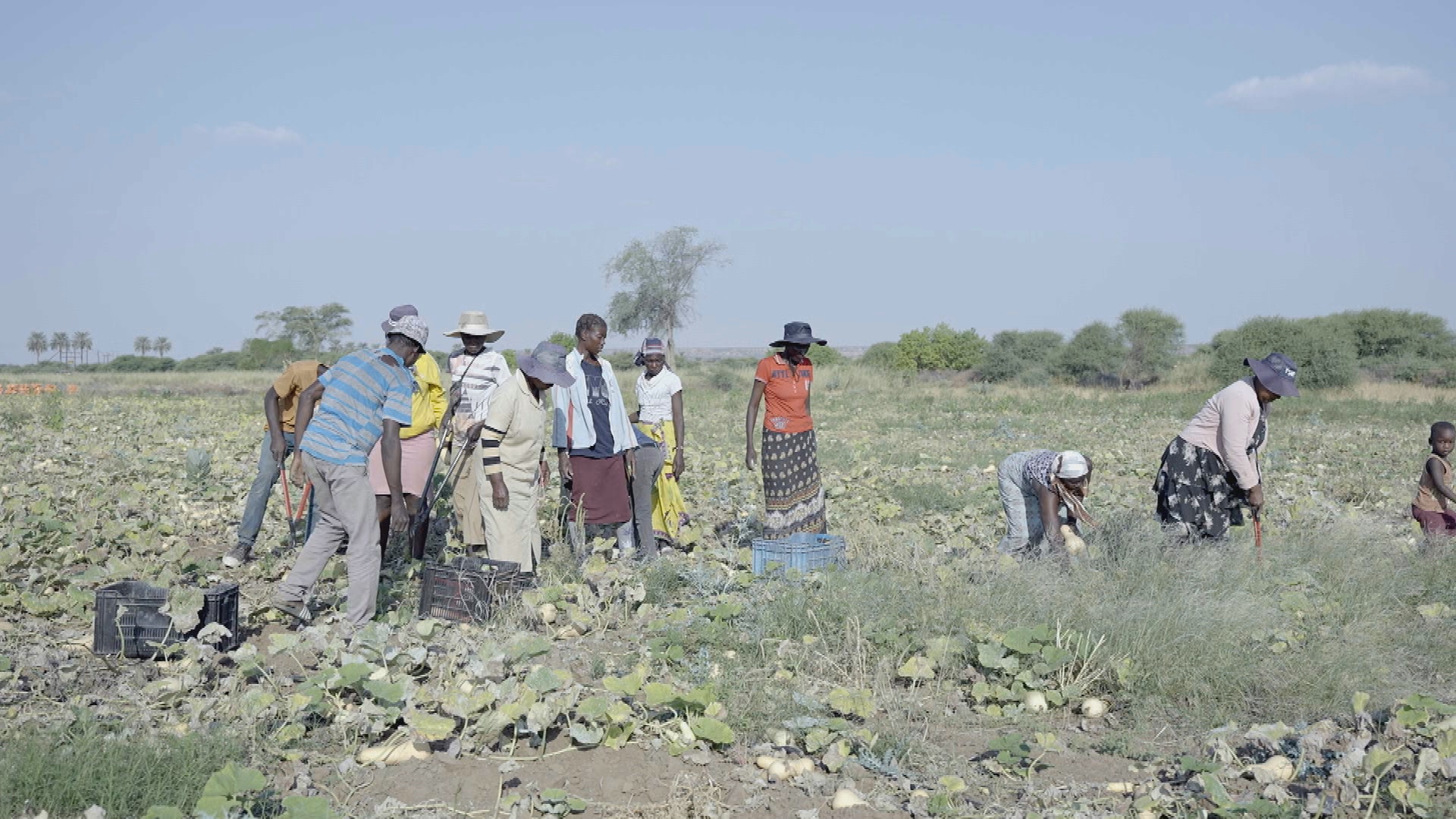
Farming on Den Staat farm in Mapungubwe Cultural Landscape. Picture: Shoot the Breeze for PLAAS.
Editing: Deshnee Subramany
