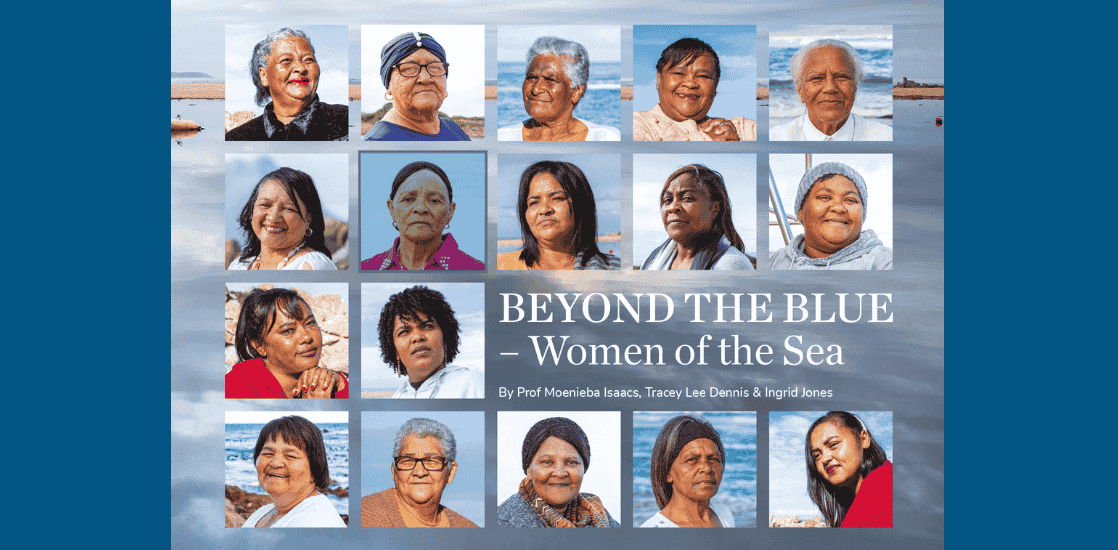
Beyond The Blue – Women of the Sea, documents the lives and livelihoods of 17 women who give a snapshot into the world of fishing rights complexities, entrepreneurship, motherhood, and making a living from the sea. The book’s focus is to record the women’s progress and tell their life stories in a way that will honour them and give them a place in history.
Hear from the women in the book

Sarah Niemand, fisher woman. Picture: Natalie Gabriels, PLAAS
Sarah Niemand (53): A resilient woman making full use of the opportunities available to her
Sarah was born into the rhythm of the ocean. Her father processed seals, her mother harvested kelp, and she grew up knowing the sea’s bounty and its hardships. She remembers seal biltong, the oil used for medicine, and the quiet work of burying carcasses. The ocean was never just a place — it was survival.
She met Danie, her husband, as a young girl, and their love endured decades of struggle. Moving to Mitchells Plain, she faced race and class prejudices that made her feel small. When Danie lost his job, they returned to Buffeljagsbaai, where he was drawn into abalone poaching. Sarah stood by him through years of crime, gangs, and addiction. Even when he was stabbed in a poaching dispute, she remained steadfast, finding solace in her faith.
But Sarah was never just a bystander. She became an activist, fighting for small-scale fishers. She joined the ANC, brought government officials to her community, and took on leadership roles in fisheries. For 17 years, she managed interim fishing permits, facing criticism when payments were delayed. Yet, she knew her skills were needed.
Her resilience extended beyond activism. She built Blinkwater Family Cooperative, selling sour fig jam, abalone pies, and pickled fish. Through Abalobi, she brought sustainable seafood to the world, even traveling to Spain to showcase her work.
Sarah dreams of a **community-based abalone farm**, a future where fishers thrive without poaching. She has fought battles, endured loss, and carved a path through the tides. The ocean shaped her, and in return, she fights to protect it. One wonders—will Blinkwater be the name that carries her legacy forward?
Fatiema ‘Poppie’ Kok (46): the woman fisher who earned the respect of men after breaking a snoek’s neck under her arm the way they could

Fatiema Kok, fisher woman. Picture: Natalie Gabriels, PLAAS
Poppie’s story is one of grit, love, and an unbreakable bond with the ocean. She grew up wild, running away at 12 to live in the bush, craving solitude and freedom. But it was the sea that truly captured her heart. At 15, she met Mervin, her soulmate, and together they fished, braving storms and tangled nets. She fought for her place among the men, struggling for years until she mastered the art of breaking a snoek’s neck—earning their respect.
Fishing was her life, but it was never easy. The men swore, the work was brutal, and even her husband refused to give her special treatment. Yet, she endured. When democracy arrived, she hoped for change, but patriarchy kept her in the shadows. She was excluded from meetings where fishing quotas were decided, forced to sit outside while men shaped the future.
She fought for her rights, joining cooperatives, trusting leaders who promised fairness. But betrayal came. After years of dedication, she was cast aside, used as a pawn by elites who secured fishing rights for themselves. Then, tragedy struck — Mervin drowned at sea, leaving her shattered.
Despite the pain, Poppie refuses to give up. She dreams of Fair Share Fishing Rights, a quota she can manage herself. She has earned it. She deserves it. The ocean has been her home, her battle, her solace. Now, she fights for her legacy—her rightful place in the waters that shaped her.
 Carmelita Mostert (48): the Saldanha activist who should have been a lawyer
Carmelita carries the ocean in her heart, the waves in her voice, and the fight for her people in her soul. Born into a fisher family, she grew up watching her father navigate the sea with faith and instinct. He taught her that the ocean speaks — to the rocks, to the wind, to those who truly listen. And Carmelita listened.
She saw the injustices in the fishing industry — the unfair allocation of rights, the exploitation of fishers by big companies. She watched her father fight back, hiring a lawyer to challenge the system. That moment sparked something in her. She didn’t have sea legs, but she had a sharp mind, a fierce determination, and an unshakable belief in justice.
Her activism took root in 2007 when she joined Masifundise Development Trust and Coastal Links, securing 32 interim fishing rights for her community. She knocked on doors, convinced hesitant fishers to join, and led them for 13 years. She became their voice, using Radio West Coast to spread awareness, attending workshops, and traveling to meet fishers from around the world.
But Carmelita’s fight wasn’t just about fishing. She stood against Karpowership, battling to protect the marine ecosystem from harmful energy projects. She challenged seismic surveys for oil and gas, ensuring fishers had a say in decisions that affected their livelihoods.
Now, she’s building something new. She’s working with Abalobi, marketing Cape bream, and running a restaurant partnership in Jacobsbaai. She dreams of retiring at 50, passing her legacy to her children—especially her daughter, a licensed skipper.
Carmelita is more than an activist. She is a force of nature, a guardian of the sea, and a woman who refuses to let the tides wash away her people’s future.
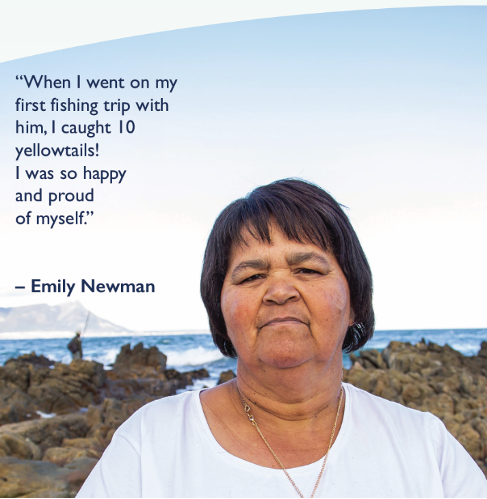
Emily Newman, fisher woman. Picture: Natalie Gabriels, PLAAS
Emily Newman (53): a lifelong love affair with fishing and the sea
Aunty Miemie’s story is woven with the tides, shaped by the rhythm of the ocean and the rivers that first taught her how to fish. Born in Melkhoutfontein, she grew up watching her parents work the waters—her mother fishing in the river, her father a seaman. As a child, she and her siblings would wake early to sell herders to farmworkers, their earnings just enough to buy bread and milk for the day.
She left school young, working various jobs before settling in Struisbaai, but her heart never strayed far from the sea. Fishing was in her blood, and when she finally convinced her husband to take her out, she caught ten yellowtails on her first trip. That was it—she was hooked. She became his partner in the trade, scaling, gutting, and filleting fish with skill passed down from her mother.
Her passion led her to Abalobi, a tech-driven initiative supporting small-scale fishers. She started as an observer, then stepped in to improve fish handling, eventually becoming a quality controller. Now, her whole family works in the industry—her husband owns a chuckie, her son a speedboat, and her daughter joined her in QC operations.
She dreams of owning her own storeroom, a space where fish can be processed with care. The ocean has given her a life, a purpose, and a future. And as she continues to learn and grow, she knows—her journey with the sea is far from over.
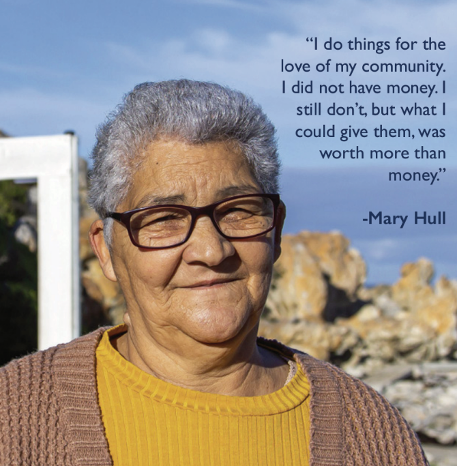
Mary Hull, fisher woman. Picture: Natalie Gabriels, PLAAS
Mary Hull (68): The line-dancing go-getter dedicated to mothering many
Mary’s story begins with sacrifice. As a teenager, she took on responsibilities far beyond her years, leaving school to care for her younger siblings so her mother could work. Her life was shaped by duty, but it was also shaped by love. When she discovered her estranged father lived in Kleinmond, she refused to leave, ensuring her family found stability there.
She met Winston, a devoted angler, and built a life alongside the sea, but her heart always belonged to service. From fostering children to volunteering at pre-schools and welfare organizations, Mary poured herself into her community. When small-scale fishers were neglected, she stepped forward, advocating for their rights. She joined Masifundise Development Trust, fought for fair quotas, and became a monitor, ensuring fishing regulations were upheld.
Her persistence earned her an Interim Relief permit, allowing her to fish legally, but her mission didn’t stop there. She became a caretaker, guiding fishers through the complexities of permits and policies, ensuring no one was left behind. It wasn’t easy—she faced sleepless nights, bureaucracy, and even corruption—but she refused to back down.
Now, at 68, Mary dreams of starting a soup kitchen, providing meals for children in need. Though she’s stepping back from activism, the ocean remains her constant companion. She finds peace in its waves, knowing that no matter where life leads her, she will always be called back to the sea. A fierce advocate, a nurturer, and a fighter, Mary Hull’s legacy is one of courage, compassion, and unwavering love for her people and the ocean.
Beyond the Blue is available in hardcopy.
Cover Price: R350
Banking details below
Reference: Beyond the Blue